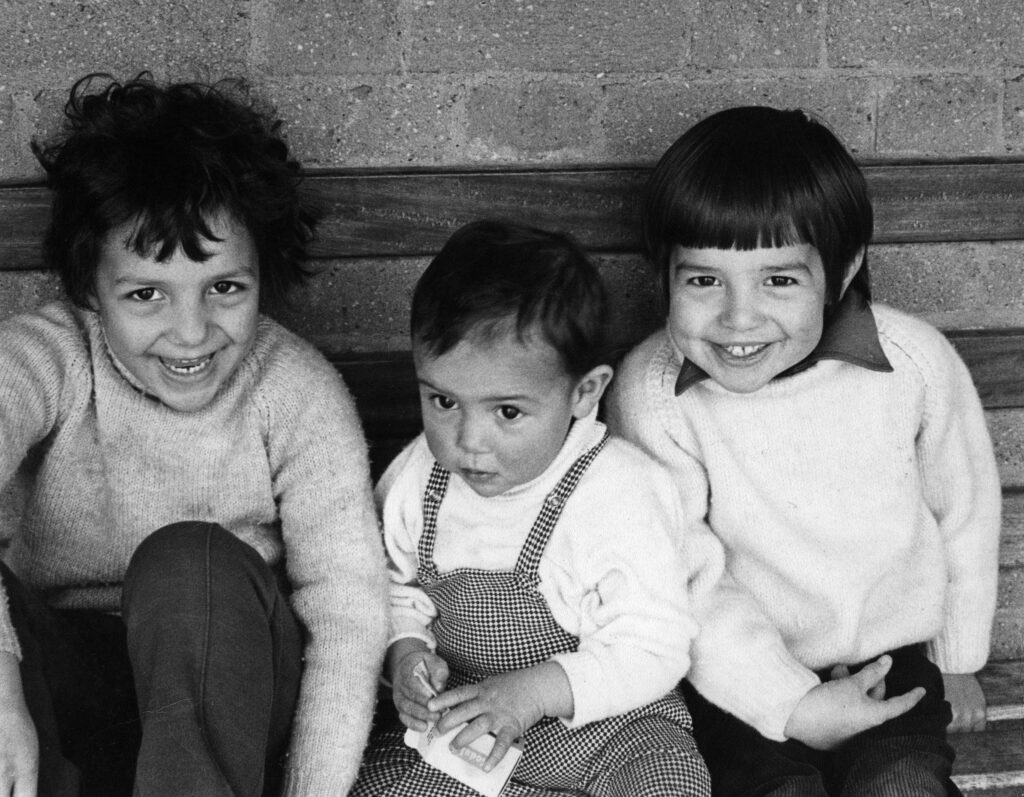
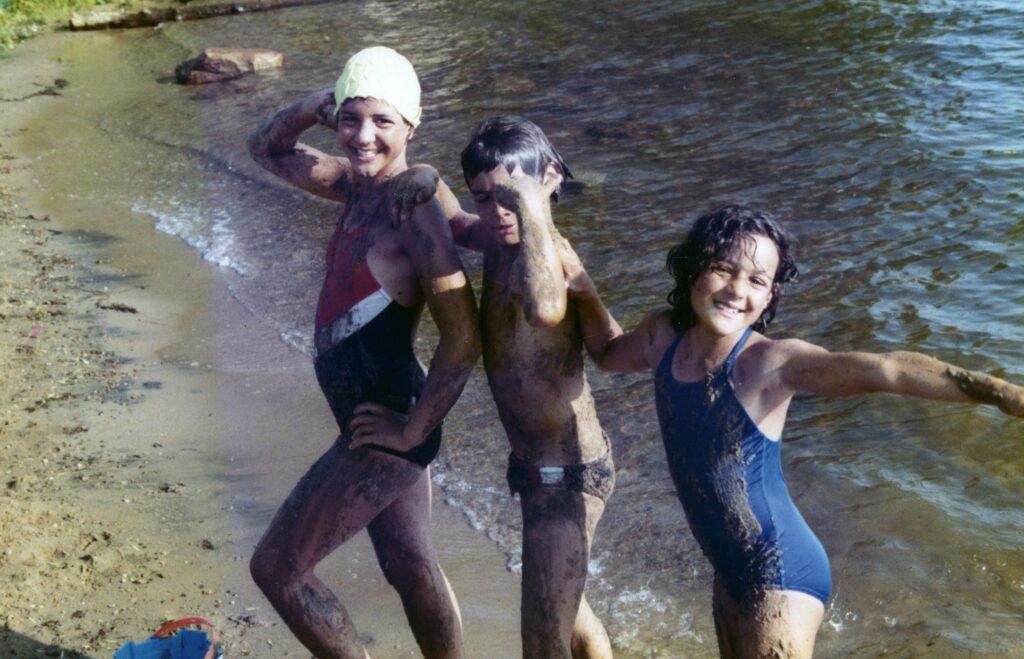
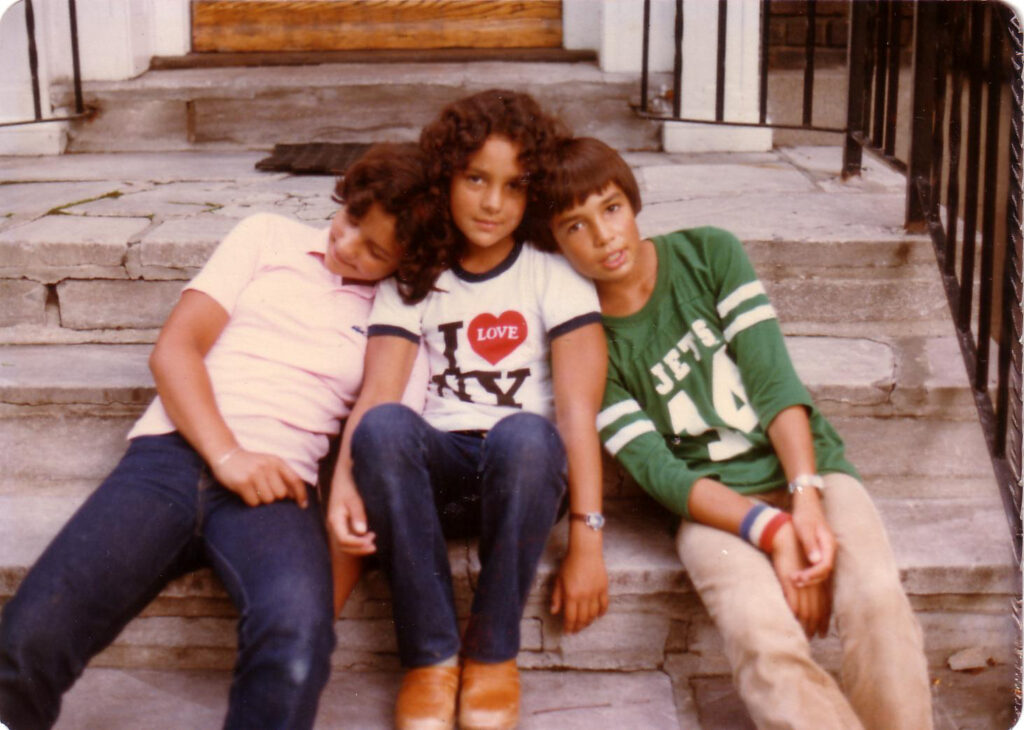
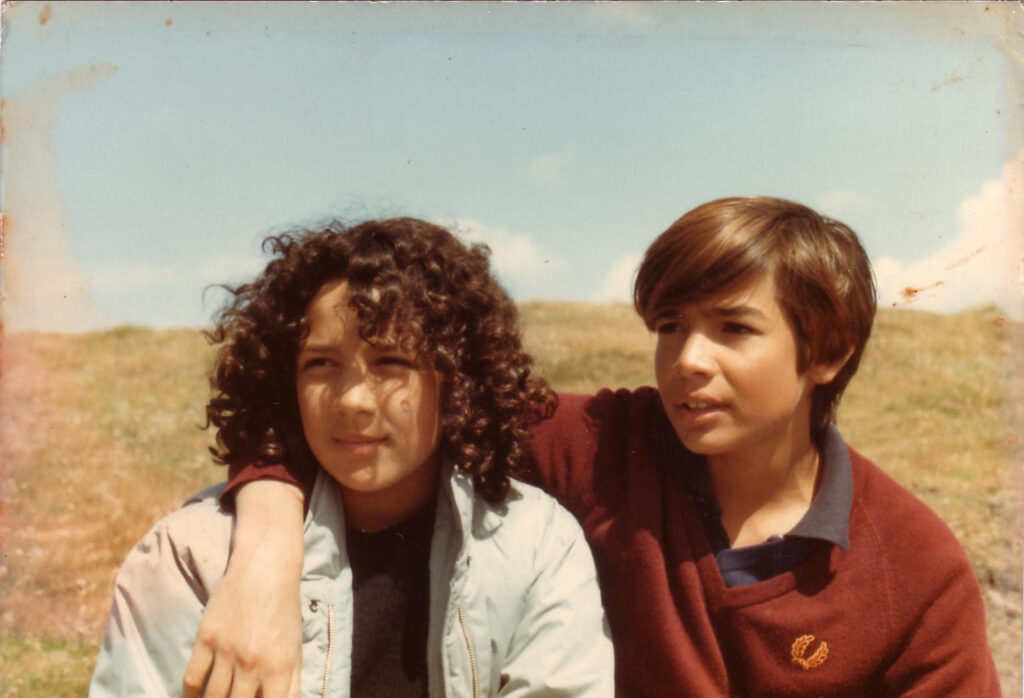
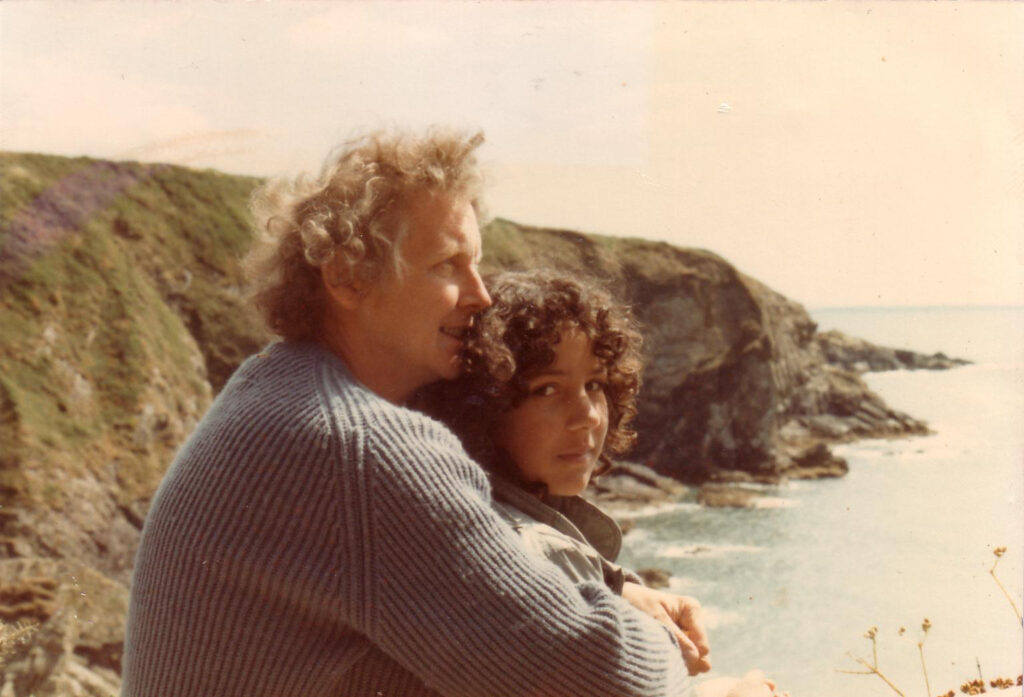
I was born in London in the 70’s. I thought I had a normal family life until illness and loss ravaged it.
My brother’s death by suicide when I was 17 shattered me. The legacy of his death reverberated through my life like the aftershocks of an earthquake.
There were tremors before that — my mother’s death when I was 13 and my father’s battle with severe mental illness. Nothing however was more profoundly devastating than my brother taking his own life. The next three decades saw me learning how to live again.
I felt helpless, rejected, abandoned and ashamed. I struggled, I ran and I shrank. Eventually I grew.
The Journey
The path forward was messy and convoluted. I moved to Australia in my mid-twenties, carrying my grief across hemispheres, searching — though I didn’t fully know it then — for a way to make sense of what had happened to my family. I retrained as a physiotherapist, drawn to work that involved understanding the body and helping people heal. But something was still pulling me toward something bigger, something harder, something that felt more urgent.
In 2005 I joined Fire and Rescue NSW as an operational firefighter. It was not an obvious choice for a physiotherapist in her thirties, but it turned out to be one of the most important decisions of my life. For nearly two decades I worked alongside some of the most extraordinary people I have ever met — people who turn toward danger, who so often carry what they witness in silence, and who are far too frequently lost to the very thing that had taken my brother. I became a peer support officer, a mental health first aid facilitator and later a wellbeing coordinator, working alongside researchers at the Black Dog Institute to implement programs aimed at building resilience and improving mental health outcomes in firefighters. I was awarded the Australian Fire Service Medal in 2022 in recognition of that work — an honour I carry with humility, because the real work was done by the people around me.
All the while, the question that had haunted me since I was seventeen — why? — was becoming the engine of something new. In 2009 I began writing down my life story. What started as a personal attempt to make sense of my past became Standing on My Brother’s Shoulders: Making Peace with Grief and Suicide, published in the UK and Australia in 2015, and subsequently in France and China. Writing it taught me something I hadn’t expected: that the act of putting your story into words — of narrating your own experience — is itself a form of healing. That insight never left me.
It led me, eventually, to research. In 2018 I began my PhD at the University of New England, exploring the impact of suicide on firefighters through the lens of narrative inquiry — listening deeply to the stories of those who had lived it. It was the most challenging and the most meaningful work I had ever done. In 2024 I was awarded my doctorate and received the Chancellor’s Medal, recognising research of exceptional merit and international standing. But what mattered most to me was not the medal — it was the voices of the firefighters who trusted me with their stories, and the knowledge that their experiences were now part of the evidence base that might change how we support people like them.
What Drives Me
I believe that lived experience is not a footnote to research — it is the foundation of it. The people who have been through something carry a kind of wisdom and knowledge that no survey can capture and no textbook can teach. My job is to make sure those voices are heard — in research, in practice, in policy, and in the rooms where decisions get made.
I also believe — because my own life has shown me — that the most devastating experiences can become the source of the deepest meaning. That is not a platitude. It is hard, non-linear, sometimes brutal work. But it is possible. And it matters.
Where I Am Now
I now serve as Emergency Services Lead at the Black Dog Institute and as Adjunct Senior Lecturer at the University of New England. The work draws on everything I have ever experienced and done — the losses of my childhood, the clinical grounding of physiotherapy, the frontline years in the fire service, the research, the writing, the speaking. It is, finally, all one thing — and I know exactly why I am doing it.
Beyond the work
I am a traveller and adventurer at heart — happiest outdoors, close to nature, exploring new countries, cuisines and cultures. For many years I was a competitive surf lifesaver, winning my first Australian national representative cap in the open women’s surfboat division in 2018 — eight years after winning my first masters title, which I think says something about me – I never do anything in the most straightforward or expected way! In 2021, I cycled 5,000 kilometres unsupported, across Australia with a friend, raising over $21,000 for Lifeline – a national suicide prevention charity. I love healthy food but also have a well-documented weakness for cheesecake and fine wine. The simple things in life make me happy. And I am a very proud mum to Nelson, a black Labrador, who kept me grounded through every page of my PhD and earned himself a spot in the Acknowledgments. I can most often be found walking and swimming with him on the beach near my home in Sydney.
Awards & Recognition
- 2024 — Chancellor’s Medal for Doctoral Research, University of New England
- 2024 — Rotary International Paul Harris Fellow
- 2022 — Australian Fire Service Medal (AFSM), Commonwealth of Australia
- 2022 — Commissioner’s Safety Award for Excellence — Fire and Rescue NSW
- 2021 — National Emergency Medal, Commonwealth of Australia
- 2021 — NSW Premier’s Bushfire Emergency Citation
- 2020 — National Medal, Department of Prime Minister
- 2018 — Australian Rotary Health PhD Scholarship
- 2018 — Australian Representative Surf Lifesaving Cap
- 2017 — Inspirational Woman of the Year — Finalist, Rotary Districts 9675 & 9685
- 2017 — Bruce Purdy Award, North Bondi Surf Lifesaving Club
- 2000 — Golden Key National Honour Society, University of Sydney